Saturday, 24 September 2011

Former deputy editor received £25,000 from News of the World publisher after starting work as consultant with police force

news-world-paid-wallis-met
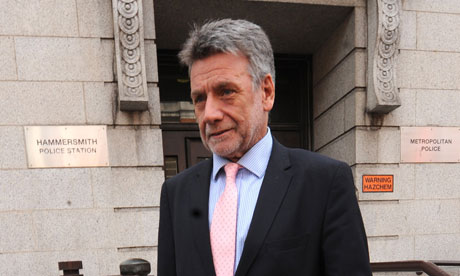
Former News of the World deputy editor Neil Wallis leaving Hammersmith police station in July. Photograph: Murray Sanders/Mail On Sunday

The relationship between the police and the News of the World has come under fire again amid revelations that Neil Wallis, the former deputy editor of the News of the World, was paid by the paper's publisher for "crime exclusives" while working for the Metropolitan police.

Wallis was secretly paid more than £25,000 by News International after he left the paper and got a contract to work two days a month as a PR consultant with the Met. One story earned him a single payment of £10,000.

The Daily Telegraph claims that internal records obtained by Scotland Yard show that he was paid for providing News International with details of a suspected assassination attempt on the Pope during his visit to the UK last year.

A spokesman for Scotland Yard said the contract it had with Wallis's PR firm, Chamy Media, "had a confidentiality clause, a data protection act clause and a conflict of interest clause within it".

He added that Wallis did not have access to the Met's IT systems.

The revelations that Wallis received money from News International while working for Scotland Yard will raise questions about conflicts of interest.

Last month, it emerged that Andy Coulson, the former editor of the News of the World, continued to receive payments from News International as part of a severance deal after he was employed by the Tory party as its director of communications.

Wallis's solicitor has made a complaint alleging that the police had leaked the information regarding the payments.


Suit Planned Against News Corp. in U.S. Over Phone Hacking


lawyer representing some of Britain’s phone hacking victims said on Friday that he was planning legal action in the United States against the News Corporation, the parent company of Rupert Murdoch’s global media empire. Enlarge This Image Luke Macgregor/Reuters Mark Lewis said he had held discussions about the steps needed to proceed against the News Corporation in New York. Multimedia Interactive Graphic Key Figures in the Phone Hacking Case Graphic Statements by Top Figures in the Hacking Scandal Interactive Feature Anatomy of the News International Scandal Related Millions May Go to Girl’s Family in Hacking Case (September 20, 2011) Times Topic: British Phone Hacking Scandal (News of the World) In a series of interviews in London, the lawyer, Mark Lewis, said he had held discussions with American lawyers about the steps necessary to open proceedings against the News Corporation in New York, and that he expected the process to begin soon. He said he had hired Norman Siegel, a New York lawyer who has represented many of the families of those killed in the terrorist attacks on Sept. 11, 2001, to handle the case. In an interview with Sky News, a British television network that is part of the Murdoch empire, Mr. Lewis said that the legal action in the United States would focus on the “News Corporation’s liability for actions by its foreign subsidiaries,” including the tabloid The News of the World, which has been at the center of the phone hacking scandal and was closed in July. He said the lawsuits would focus on the revelations of widespread phone hacking in Britain and on accusations that the police were bribed to assist in the tabloid’s pursuit of scoops. Mr. Lewis did not respond to voice mail messages requesting an interview on the issue. In another development, Andy Coulson, a former editor of The News of the World, has sued News International, the News Corporation’s British subsidiary, because it stopped paying for his legal fees in the hacking case, the BBC reported. Mr. Coulson, who was arrested in July in connection with the investigations into phone hacking and payments to police officials under his editorship, resigned in January as the communications director for Prime Minister David Cameron. Mr. Lewis, based on his remarks in the interviews with Sky News, the BBC and the newspaper The Guardian, appeared to be relying, as a basis for the American legal action, on the Foreign Corrupt Practices Act, a 1977 statute that holds American companies and their executives liable for corrupt activities abroad, including bribery of foreign officials. In the Sky News interview, he said part of the reason for pursuing the News Corporation in American courts was the prospect of higher damage settlements than are customary in the British courts. The prospect of defending itself against civil suits in American courts would add a daunting new dimension to the challenges facing the News Corporation as a result of the phone hacking revelations in Britain. But some legal experts in Britain said that Mr. Lewis’s announcement was a publicity stunt, and that the move could complicate legal proceedings in Britain. Mark Thomson, a British lawyer who also represents phone hacking victims, issued a brusque statement disassociating himself from Mr. Lewis’s action. Mr. Thomson said the class-action lawsuit he has filed on behalf of his clients will go to trial in Britain in January, adding, “My clients are not taking part in the reported action in New York.” This week, News International offered a settlement of about $3.2 million, and a further payment of about $1.6 million to go to charity, to the family of Milly Dowler, a teenage murder victim whose voice mail messages were intercepted by The News of the World. The scandal has led to strong pressures on James Murdoch, a son of Rupert Murdoch who leads the company’s European and Asian operations. Both denied any prior knowledge of the practices at The News of the World.

Phone hacking: Ex-editor Coulson sues newspaper group


Former News of the World editor Andy Coulson is suing his ex-employer after it stopped paying his legal fees in relation to the phone-hacking scandal. His lawyers have filed papers at the High Court against News International subsidiary News Group Newspapers. Mr Coulson was arrested in July over NoW phone-hacking allegations. He denies knowledge of the practice. It has emerged some UK victims of alleged hacking are considering US legal action against News Corporation. US lawyers have been asked to explore the possibility of a case against Rupert Murdoch's media group. Arrangement ended Papers were filed at the High Court by Mr Coulson's lawyers on Thursday. BBC political correspondent Robin Brant said: "Even though Andy Coulson hasn't worked for the publishers of the now-defunct News of the World for more than four years, the paper's owners were still paying his legal fees in relation to the hacking investigations. "But following Rupert Murdoch's appearance at the Home Affairs Select Committee in July the arrangement ended." Mr Coulson resigned as Prime Minister David Cameron's director of communications in January, saying that the ongoing coverage of the phone-hacking scandal was making it too difficult for him to do his job. But he has always said he knew nothing about phone hacking under his editorship of the News of the World. Met stories claim Meanwhile, the Telegraph newspaper has claimed that News International paid Mr Coulson's former deputy, Neil Wallis, for stories when Mr Wallis was working for the Metropolitan Police. Mr Wallis became executive editor of News of the World after Mr Coulson left and, after his tenure, left to work as a PR consultant at Scotland Yard. Neil Wallis worked for News of the World before working as a PR consultant for the Met It is understood the contract involved him working two days a month at £1,000 a day, for Met Commissioner Sir Paul Stephenson and Assistant Commissioner John Yates. Mr Wallis was arrested in July and his arrest was followed by the resignations of those two senior officers. The Telegraph claims that while Mr Wallis was on the payroll at Scotland Yard, he was paid more than £25,000 by News International to pass on information for stories. It alleges he was paid £10,000 for one story alone. On Friday night, Neil Wallis's lawyer issued a statement alleging that Scotland Yard had leaked information about Mr Wallis. Scotland Yard have confirmed they received a letter of complaint from the lawyer. They say Neil Wallis had signed a conflict of interest clause in his contract when he worked for them and also that he did not have access to the Met's IT systems. The allegations came on the same day it emerged News International had already agreed some settlements with UK victims of phone hacking. Mark Lewis, UK lawyer for a small group of alleged victims, told the BBC News channel: "Although events might have happened in territories abroad, the American organisation can be responsible. "News Corporation - although it's an American organisation, although these claimants are to large extent British and the events that might have happened in Britain, although some happened while people were away - they are meant to have some control under American law, have a great deal of control over what happens in foreign subsidiaries." He added: "We are looking at the practices of control effectively - of directors, and of knowledge of directors, and knowledge or what should have been knowledge of directors, of a large corporation based in America." Payouts US lawyer Norman Siegel told BBC News he was at an "exploratory phase" of examining evidence that had emerged in the UK to see if US federal laws or New York state laws may have been violated. When contacted on Friday, News Corporation declined to comment. The News of the World phone-hacking scandal led to the closure of the UK tabloid in July after 168 years in print. A number of people have been arrested, including Mr Coulson, as part of Scotland Yard's investigation - Operation Weeting - into phone-hacking allegations. Settlements already agreed by News International include: a reported £700,000 to Gordon Taylor of the Football Association; £100,000 in damages plus costs to actress Sienna Miller; £20,000 in damages to football pundit Andy Gray. It is thought that a £2m settlement has been agreed with the family of murdered schoolgirl Milly Dowler, with Mr Murdoch also thought to be making a personal donation of £1m to charity as part of the deal. The revelation that the voicemail of Milly's mobile phone had been hacked, when she was missing but before her body had been found, reignited the phone-hacking scandal in July.

Thursday, 22 September 2011

Scottish supermarkets face extra tax on selling alcohol


Plans to hike business rates for major retailers of alcohol and tobacco in Scotland could see supermarkets pay around £110 million in tax over the next three years.   Finance Secretary John Swinney announced the new levy yesterday, as part of the Scottish government’s Spending Review.   Swinney said the review contained “tough choices, because of the cuts from Westminster that go too far, too fast”.   “We have had to restrict pay costs, reluctantly implement pensions increases on public sector staff, and maximise the income gained from asset sales,” he said.   He outlined that part of the extra revenue brought in would come from a tax on major retailers who sell alcohol and tobacco.   The measure was a surprise announcement, as during the last parliament a proposal to introduce a “Tesco tax” was voted down and it was not included the SNP’s manifesto.   Scottish Retail Consortium director Ian Shearer said: “This new tax is a blatant fund-raising exercise which is illogical and discriminatory. It targets a part of the retail sector which funds Drinkaware, rigorously prevents under-age sales with Challenge 25 and has led the way on clear alcohol labelling, giving it an exemplary record on the sale of alcohol and tobacco.   “Supermarket margins are already cut to the bone as stores compete to offer the best deals to cash-strapped consumers. The UK already has some of the highest alcohol taxes in Europe. This tax would make it harder for food retailers to keep prices down for customers, and makes Scotland a less attractive place to do business, invest and create jobs.”   The WSTA's Jeremy Beadles said he was "disappointed" the meaure had been announced with no consultation.   "The tax on large retailers will place an additional burden on Scottish businesses and push the price up for all consumers regardless of whether they consume alcohol at all,” he added.   “At a time of financial constraint, when many businesses in Scotland are already feeling the pinch and paying increase rates, we do not believe that punishing responsible consumers in Scotland with another tax is either fair or justified.”     Minimum alcohol unit pricing could become as reality north of the border by next summer, although the price has not yet been set. The Scottish government claims it is the “most effective and efficient way” of reducing consumption and alcohol related harm.

Bloody Sunday family rejects payout


Relatives of one of the Bloody Sunday victims have firmly rejected any offer of Government compensation. Sisters Linda and Kate Nash, whose teenage brother William was among 14 men who died after paratroopers opened fire on civil rights protesters in Londonderry in January 1972, said: "I find it repulsive." The Ministry of Defence has confirmed that moves are under way to compensate the families following representation from solicitors acting on behalf of some of the relatives. The Nash sisters said they would not take money for personal financial gain: "Not under any circumstances will I ever accept money for the loss of my brother. "I find it repulsive, taking anything from the MoD. If the MoD wants to set up bursaries they can, but not in my brother's name," Ms Nash said. Prime Minister David Cameron has already apologised to victims and said the shootings were wrong. An MOD spokesman said: "We acknowledge the pain felt by these families for nearly 40 years, and that members of the armed forces acted wrongly. For that, the Government is deeply sorry. We are in contact with the families' solicitors and where there is a legal liability to pay compensation, we will do so." Lord Saville drew up a landmark report last year which criticised the Army over the killings. His panel ruled that the Army fired first and without provocation. It found that all 14 who died and the others who were injured almost four decades ago were unarmed and completely innocent. The MoD's move followed a letter sent to the Prime Minister by solicitors for the families, asking what he was going to do about Bloody Sunday. He described the killings as unjustified and unjustifiable. Defining who would be eligible for compensation could be complicated as many immediate family members are already dead. Relatives received a small payment worth a few hundred pounds from the MOD, without admitting liability, shortly after the event.

Wednesday, 21 September 2011

AK47 used on Panda, say gardai


GUNMEN used an AK47 assault rifle to shoot notorious gangster 'The Panda' in Dublin, gardai believe. Michael 'Micka' Kelly was gunned down in a hail of bullets in Marrsfield, Clongriffin, last Thursday afternoon. He was hit up to six times by bullets from a rifle and handgun -- and reports today said one of the gunman used a Kalashnikov, the rifle favoured by IRA dissidents, to kill him. The Russian-designed assault rifle is the most widely used in the world, carried by everyone from Osama bin Laden to Mexican drug gangs. The gun can be bought for as little as €300 in eastern Europe, according to Europol, the European police organisation. Gardai have seized a number of the weapons over the past few months and last year recovered two of the deadly 7.62mm automatic weapons, which fire at a rate of 600 rounds per minutes, in counties Wicklow and Kildare. The rifle's 30 shot magazine can be emptied in just a couple of seconds when fired on full automatic. Two gunmen lay in wait for the gangster nicknamed 'The Panda' at his girlfriend's home. He was first hit by shots from a car then his killers jumped out and fired more bullets into him before driving over his body. His heartbroken family are still waiting for his body to be released. Last Thursday's execution is considered the most significant gangland murder in Ireland since Eamon 'The Don' Dunne was shot dead last year.

Violence expected as gang tensions flare in B.C.


Two brazen, targeted shootings of known British Columbia gangsters in less than a month may be the kindling that sparks renewed gang warfare in the Lower Mainland, say police. The officer who heads the province's gangs task force issued an "unusual" alert Tuesday to anyone with links to two notorious crime families after a known gangster was shot and wounded last week in Surrey, B.C. Supt. Tom McCluskie told reporters both that incident and the high-profile slaying of Red Scorpions' gang boss Jonathan Bacon in August amount to a high expectation by his 80 investigators that more attacks are on the way. "We're anticipating retaliatory violence, yes," he said at a news conference held at an office of the Combined Forces Special Enforcement Unit in Delta, B.C. "I'm not trying to instill fear in the citizens, but certainly there's enough tension in there that we're concerned there will be a retaliation, that there will be further violence." The 24-year-old man shot in his car on Friday was a known member of the Dhak crime group, which police say runs an illegal drug ring throughout the Lower Mainland. One member of that family, Gurmit Dhak, was shot dead in his BMW at a suburban Burnaby mall last October, in another scenario police said was planned. Anyone with ties to either the Dhak or Duhre crime families are currently believed to be in heightened danger, and hanging around with such people could result in peril, McCluskie said. He said he's especially concerned for the members' girl friends and those who are simply connected on the social scene. Members of both groups have been linked to criminal activity on numerous occasions by police in B.C. in the past. While the public is not the intended target, McCluskie said, there's no telling where or when the tension will flare up again as gang rivalries rear their ugly head. It means bystanders could even get caught in the crossfire, he said. Thirty-year-old Bacon was shot to death outside a posh hotel in Kelowna. The gunfire that put the latest gangster in hospital broke out on a city street. "It's the fact these guys don't care where it is, they have no regard whatsoever for the general public," McCluskie said. Officers are examining the possibility the two incidents are directly linked, although at this point it's too early to draw conclusions, he said. "As of right now we haven't made any confirmed connection." The news conference is the most vocal and direct police have been in declaring expectations around the possibility of more bloodshed since Bacon died. Tit-for-tat clashes became a weekly occurrence for several months back in 2009, as turf battles played out in the Lower Mainland. There were at least four dozen shootings that year in the Vancouver area alone. Tensions were reduced to simmering, however, as police changed their strategy, made arrests of prominent players and conducted more behind-the-scenes enforcement. Police say alarm bells went off for many dealing with the organized crime world when Bacon was unexpectedly taken out. A full-patch member of the Hells Angels and another alleged gang member were hit by the mid-day volley of gunfire on Aug. 14, while two others accompanying them in a luxury SUV were also wounded. McCluskie said he's "pleased" with how his team is progressing in that investigation, but couldn't say when any arrests may be made. McCluskie wouldn't give any details about the new "intelligence" his team has gathered suggesting people tied to the two families are in danger, in order to protect the investigation. He said officers have already conducted several "duty-to-warns," telling known gang members they have reason to believe they might be next. "I'm not confident it reaches all those individuals, I'm hopeful," he said, noting he's less concerned about giving the groups credence by putting out the warning than letting the public know the risks. "Quite often the gangs don't listen to us very well."

Tuesday, 20 September 2011

Scotland Yard drops Official Secrets Act bid against Guardian


Scotland Yard had intended to take the Guardian newspaper to court on Friday in an attempt to force the newspaper into revealing how it obtained information that missing schoolgirl Milly Dowler’s mobile phone had been hacked. However, following discussions with the Crown Prosecution Service (CPS), the force has abandoned its application for production orders against the newspaper. The decision comes following heavy criticism of the force’s attempt to make the Guardian, and one of its journalists, hand over information which would have revealed the source of many of the newspaper’s phone hacking stories. Various MPs, including the shadow culture secretary Ivan Lewis, questioned the Yard’s attempt. While many national newspapers carried leading articles condemning the Metropolitan Police’s apparent attack on press freedom. And today the former Attorney General Lord Goldsmith told the Daily Telegraph that the force’s decision to invoke the Official Secrets Act was “unusual” and could threaten press freedom.

NAVY recruit flipped and killed an officer in a gun rampage on a nuclear sub after he was told off for his cleaning work.

Ryan Donovan, 23, fired his SA80 semi-automatic rifle after his hopes of a voyage on a surface ship were dashed as punishment for his shoddy work.

He was also obsessed with violent video games and told a friend he wanted to carry out a Grand Theft Auto-style "kill frenzy".

Yesterday the HMS Astute able seaman was jailed for life by a judge who heard he opened fire on two superiors he blamed — only to miss.


Victim ... Ian Molyneux with wife Gill
Victim ... Ian Molyneux 
with wife Gill


The shots were heard by Lieutenant Commander Ian Molyneux, 36, who rushed to tackle him during a goodwill visit by the sub to Southampton in April.

Donovan murdered him with a bullet to the head, then stepped over his body to the control room.

There he wounded Lt Cdr Christopher Hodge, 45, in the stomach before being wrestled to the ground by Southampton council leader Royston Smith and chief executive Alistair Neill — who were touring the sub.

Three days earlier Donovan of Dartford, Kent, disobeyed a direct order to clean a section of the sub after it failed inspections, Winchester Crown Court heard.


Hero ... Royston Smith, right, on sub visit


Gangsta rap fan Donovan — who called himself Reggie Moondog — told a fellow sailor hours before his rampage: "I'm going to kill somebody. I'm not f****** kidding, and then watch the news."

He admitted murder and attempted murder and was caged for a minimum of 25 years. The widow of the dead officer — a dad of four — wept just feet away.

Outside court Gill Molyneux paid tribute to her Weapons Engineer Officer husband, describing him as "my hero and true love".


Clegg condemns 'grotesque' hacking


No amount of money can absolve News International from hacking in to the phone of Surrey murder victim Milly Dowler, Liberal Democrat leader Nick Clegg has said , following the disclosure that the company was about to settle its case with the teenager's family. Rupert Murdoch is set to donate £1 million to charity from his own pocket, while the Dowlers themselves will receive in the region of £2 million in a separate payout from News International, the publishers of the now-closed News of the World. The company has confirmed it is in "advanced negotiations" with relatives of the 13-year-old, who was abducted and killed by Levi Bellfield in 2002. On Tuesday Mr Clegg said no amount of money could absolve the company for what happened. He said: "It is not for me to decide what money News International offer the Dowlers. I think it is very, very important we now give the Dowler family the time and space they need to rebuild their lives and move on. "I think the reason why people were so outraged by the invasion of the privacy of the Dowler family is that they weren't celebrities, they weren't politicians, they hadn't asked to be put on the front page of the nation's newspapers. I have met them and they are a lovely, strong, every-day family who lost their daughter and were dealing with that terrible tragedy and even then these journalists - it's just grotesque - were invading their privacy. "In a sense I think, and I am sure the Dowlers feel the same, that no amount of money can absolve people for what they did." News International is reported to have set aside £20 million for payments to phone hacking victims, but a source said the size of the expected compensation for the Dowlers reflected the "wholly exceptional circumstances" of their case. Sources close to the Dowlers have said any agreement will feature a donation to charity. It is not yet known which cause, or causes, would benefit. A News International spokesman said: "News International confirms it is in advanced negotiations with the Dowler family regarding their compensation settlement. No final agreement has yet been reached, but we hope to conclude the discussions as quickly as possible."

Monday, 19 September 2011

Victims' burial site is in Becket


The bodies of David Glasser, Edward Frampton and Robert Chadwell were found buried on private property in Becket, according to the District Attorney’s office. Authorities declined to be more specific and released no other new information about the case. Until this week, law enforcement officials had refused to even release the location of what they described as a "burial site," where the bodies of the three men were dumped and covered with boulders and dirt. Meanwhile, state and local police conducted what they described as a "high visibility patrol operation" Saturday in Lee, coinciding with the Berkshire Chapter of the Hells Angels’ annual party, Lobster Fest. Adam Lee Hall, who court records list as the third in command of the Berkshire Hells Angels, has been charged with three counts of murder in connection to the men’s disappearance. Otherwise, police haven’t linked the murders to the local motorcycle club, which has put up its clubhouse to cover Hall’s bail in an earlier case, according to court records. Police from Lee, Great Barrington, Pittsfield, Lenox and Dalton assisted State Police, who watched as motorcyclists from across the region descended on the Berkshire biker’s headquarters on Woodland Road in Lee, just past the entrance to October Mountain State Forest. Also on the scene were the state’s Environmental Police and the county’s Special Response Team. Police Advertisement took pictures of everyone entering and exiting Woodland Road leading to the Angels’ clubhouse. Many of the bikers seen in the area wore patches identifying themselves as members of the Hells Angels and other regional motorcycle clubs. State Police Lt. David Buell, the station commander at the troop’s Lee Barracks, said the club’s Lobster Fest is an annual event. He said police have conducted high-visibility patrols coinciding with the party for the past five years. He said police increased the number of patrols this year in light of the recent murders, but he declined to say how many officers were in the area. Buell said there were no arrests or incidents on Saturday, although he said several neighbors walked up to police in the area and thanked them for being there. Members of the Hells Angels were not immediately reachable for comment on Saturday. The group’s Facebook page indicated that tickets to the event were $30. It warned visitors to expect heavy police presence. Glasser, Frampton and Chadwell went missing sometime between Aug. 27 and 28 from Glasser’s apartment on Linden Street in Pittsfield. Hall, 34, of Peru, David Chalue, 44, of North Adams and Springfield, and Caius Veiovis, 31, of Pittsfield, have been charged with three counts each of murder, kidnapping and witness intimidation. Police said neither Chalue nor Veiovis are members of the Hells Angels. Police say the men killed Glasser to keep him from testifying against Hall during an upcoming trial in Berkshire Superior Court. Court records filed last week said men’s bodies had been dumped together in a deep trench that had been covered with large boulders and dirt, with digging equipment found nearby. According to the report, Hall had inquired about the availability and location of excavation equipment in the weeks prior to the murder.

Gangland boss Carl Williams fingers cop Paul Dale from beyond grave


ON April 24, 2007, deep inside the razor wire of Victoria's Barwon Prison, gangland killer Carl Williams finally decided to tell his story about crooked cops and Melbourne's underworld war. Williams is now dead, but his lurid tale echoed from the grave yesterday as his version of history, made in three statements over two years, was read out to a spellbound audience in the Victorian Supreme Court trial of Williams's alleged murderer, Matthew Charles Johnson. Johnson has pleaded not guilty on the basis of self-defence. According to Williams's statements, his relationship with former policeman Paul Dale began nervously. The gangland killer and the policeman were so "paranoid" about each other that they once met in a swimming pool wearing only bathers so that neither could be "wired" with listening devices. But the court heard the dealings between this odd couple would blossom into something far more deadly. Before long, what began as merely secret payments for information escalated to a murder, sanctioned and paid for by Dale, Williams alleged. The tone of the gangland killer's statements are as casual as they are cold. When Williams heard that the hitman he hired at Dale's request to kill police informer Terrence Hodson had also killed his wife, Christine, he asked the gunman: "What happened with the sheila?" "That's not for you to worry about," the gunman replied, about which Williams said, "That was the end of the conversation". According to Williams, he met Dale following his release from prison in 2002 when Dale requested a meeting with him via another criminal. "I first met him at the Brunswick Club, where Lewis Moran was killed," Williams said. "He (Dale) was telling me he could keep an eye out for me. "In return, Dale expected to be paid for any information that he gave to me . . . I think we were both suspicious of each other at that time and remained so." Williams said, early on, Dale showed him a police report that revealed that an Asian man called Jimmy had been giving information to the police about Williams, who was called "Fat Boy" in the police report. "As a result of reading the report, I dropped off Jimmy and did no more (drug-dealing) business with him." The court heard that Williams's relationship with Dale grew as they met more often. "On most occasions when I met with Dale, I would give him an envelope with money in it. The money I paid Dale usually ranged from $2000 to $5000 each time." On one occasion, he said, Dale asked him if he wanted the detective to do anything to Williams's gangland rival Jason Moran. "It was pretty widely known that Jason and I had problems at the time," Williams said in his statement. "I didn't know whether they (Dale and a fellow detective) were fair dinkum or trying to set me up. Dale said he could kill Jason for $400,000. I told them they were dreaming." Williams claimed that Dale told him he had arranged internal police systems so Victoria Police would be unable to check on Williams without Dale knowing about it. "He told me he did this so that he could keep up to date with any investigations against me." At one stage, Williams said, Dale asked him to meet in a swimming pool near Seaford where Dale told Williams to tip off fellow gangland figure Tony Mokbel about a police investigation into a drug laboratory. "We met at the swimming pool because he was paranoid of me and I was paranoid of him," said Williams. "Dale had two pairs of shorts or swimming togs. We put these on and got into the pool and walked up and down in the water." The court heard that in his April 2007 statement, Williams said he had no knowledge of who killed the Hodsons at their Kew home in May 2004, but in his second statement, in January 2009, he was ready to reveal the hitman. "I didn't want to be a dog and be a protection prisoner, but my attitude has changed," he said. Williams alleged that Dale told him he had to "get" Hodson before he could give evidence at a committal hearing about his alleged involvement in a burglary involving drugs, in which Dale was implicated. He said: "We went for a walk. Dale told me that he had to get Hodson and he had to get Hodson before Dale's committal. "Dale said he didn't want to go back to jail. He said he had been in isolation and it was tough. "He said he had someone on the job but it was taking too long to get Hodson. Dale asked me if I could help him out." Williams claimed Dale told him the job would pay $150,000. Williams said he approached a hitman who he knew had "a reputation as a fairly ruthless bloke". He met with the hitman, who can't be named for legal reasons, on the ground floor of the Marriott hotel. "I told him there was a contract there for Terry Hodson and I told him the amount of $150,000. There was never any contract on his wife and I never mentioned Terry's wife to (the hitman)." Williams said he didn't know exactly when Hodson would be murdered and the first he heard about it was on the news. The court heard that a few days after the Hodsons' deaths, Williams's statement said, he got a call from Dale telling him "it's been dropped off". "I knew he was talking about the money for the Hodson murders," Williams said. "I was at my mum's when Dale made that call to me. I went and checked the bin. It was a large green wheelie bin that Mum kept inside the gate. Inside the bin, I saw a plastic bag and I took it out of the bin and went back inside." He said he counted the money, which was bundled in $10,000 amounts with rubber bands around it. "It might have been $100 or so short but effectively the money was all there." A few days later, Williams met the hitman at the Marriott again. "I left the bag containing the $150,000 on the ground next to our seats and he collected it." "(The hitman said) 'Quick, hey?' and smiled and chuckled. "I said to him: 'What happened with the sheila?' He said: 'That's not for you to worry about.' That was the end of the conversation. "I asked him about the sheila because I didn't think she needed to die and she wasn't a part of the contract. Having said that, I didn't push it any further." Williams said he never spoke again to the hitman about the Hodson murders. "It is an unspoken rule that once a job is done, you don't mention it again so you don't get caught out on a listening device or something." He also revealed that hitmen preferred to kill on cold days because "the cold weather means it's less likely that people will be out walking around and possibly witness something". In his January 2009 statement, Williams said "since I have been locked up, (lawyer Nicola) Gobbo has told me that Dale has asked after me and has asked if there is anything he can do for me. I just dismissed it because there was nothing he can do for me and I don't want to deal with him." Williams was bashed to death in Barwon jail in April last year.

Sunday, 18 September 2011

THE record company behind Irish rockers U2 has allegedly been unwittingly used by a multi-million dollar drugs trafficking ring


THE record company behind Irish rockers U2 has allegedly been unwittingly used by a multi-million dollar drugs trafficking ring. A year-long investigation by the US Drugs Enforcement Authority (DEA) is alleged to have uncovered a racket where the band's record company, Interscope Records, was being used to transport Class A drugs and money inside the United States. It is understood that the record company's Californian headquarters was being used for pick-ups and deliveries of hundreds of kilograms of cocaine while a New York recording studio at the other end was also being used for the drug and cash shipments. Members of the drugs ring allegedly used musical equipment called “road cases” for shipping cocaine from Los Angeles to New York, between January 2010 and June 2011. On the way back, the same cases were filled with hundreds of thousands of dollars in cash, according to documents filed in a US court. The illegal trading was allegedly going on for 18 months, but it was not alleged that Interscope Records or its staff knew or were involved in any drug shipments. The allegation was contained in a letter detailing evidence against James Rosemond, a music-industry manager and head of Czar Entertainment. Mr Rosemond, 46, known as ‘Jimmy Henchmen', is a rap music manager who represents artist The Game. He was indicted three months ago on drug trafficking charges. Federal prosecutors say Interscope employees knew nothing about Mr Rosemond’s alleged drug smuggling. However, it is not yet understood how Mr Rosemond's team got access to Interscope's Californian headquarters to drop off and take the shipments. The ring is alleged to have used a New York recording studio at the other end for the drugs and cash shipments, the Wall Street Journal reported. The cases were shipped by music gear specialists RockIt Cargo, which is the company responsible for shipping U2's musical equipment around the world — including during their latest 360 tour. However, there is no suggestion in the filing that RockIt Cargo knew what was inside the cases. RockIt has not commented. Interscope chairman Jimmy Iovine, long a highprofile executive within the music industry, has recently become something of a household name thanks to American Idol, which he joined last season to provide creative guidance to contestants. His company, which is part of Universal, released a statement yesterday afternoon. “Interscope Records has been informed by the United States Attorney's Office for the Eastern District of New York that there is no evidence that any employee of UMG or Interscope Records had any involvement in the drug trafficking ring being prosecuted by that office,” the statement read.

UBS raises rogue equity trade losses to $2.3 billion


Swiss bank UBS on Sunday increased the amount it said it had lost on rogue equity trades to $2.3 billion and alleged a trader concealed his risky deals by creating fictitious hedging positions in internal systems. UBS stunned markets on Thursday when it announced unauthorised trades had lost it some $2 billion. London trader Kweku Adoboli was charged on Friday with fraud and false accounting dating back to 2008. "The loss resulted from unauthorised speculative trading in various S&P 500, DAX, and EuroStoxx index futures over the last three months," UBS said in a brief statement. "The loss arising from this matter is $2.3 billion. As previously stated, no client positions were affected." Global stock markets have been extremely volatile in recent months, plunging on concerns over euro zone and U.S. debt crises and then rebounding on hopes for their resolution. The loss is a disaster for the reputation of Switzerland's biggest bank, which had just started to recover after it almost collapsed during the financial crisis and faced a damaging U.S. investigation into aiding wealthy Americans to dodge taxes. "Loss even more. Reads like they're making excuses," said Helvea analyst Peter Thorne of the UBS statement. The new scandal has prompted calls for its top managers to step down and for its investment bank to be split into a separate unit from its core wealth management business. Chief Executive Oswald Gruebel, who was brought out of retirement in 2009 to turn the bank around, was quoted in a newspaper on Sunday as saying he is not considering quitting over the crisis, but said it was up to the board to decide. In a memo to staff on Sunday, he said: "Ultimately, the buck stops with me. I and the rest of senior management are responsible for dealing with wrongdoing." Swiss newspapers quoted unnamed insiders as saying the UBS board and important shareholders such as the Singapore sovereign wealth fund were still backing Gruebel, with immediate changes at the top the last thing the bank needed. Gruebel is widely expected to present plans to drastically cut back the investment bank at an investor day in November. INDEPENDENT INVESTIGATION The bank, whose three keys logo symbolise "confidence, security, discretion," has pulled its "We will not rest" global advertising campaign for now, that was designed by advertising agency Publicis to try to rebuild its image. Meanwhile, UBS client advisers have been writing to customers to reassure them of the underlying financial strength of the bank despite the trading loss, a spokesman said. "That we now suffer this setback at this point in our efforts to improve our reputation is very disappointing. This incident also sets us back somewhat in our capital-building efforts," Gruebel said in his memo. "However, I wish to remind you that our fundamental strengths as a firm remain intact... we remain one of the best capitalized banks in the industry. UBS said its board of directors had set up a committee chaired by independent director David Sidwell, former chief financial officer at Morgan Stanley, to conduct an independent investigation into the trades and the bank's control systems. The bank said it had covered the risk resulting from the unauthorised trades, and its equities business was again operating normally within previously defined risk limits. It said the trader had allegedly concealed the fact his trades violated UBS risk limits by executing fake exchange-traded fund (ETFs) positions. "Following inquiries directed to him by UBS control functions that were reviewing his positions, the trader revealed his unauthorised activity," the bank said. "The positions taken were within the normal business flow of a large global equity trading house as part of a properly hedged portfolio," UBS said. "However, the true magnitude of the risk exposure was distorted because the positions had been offset in our systems with fictitious, forward-settling, cash ETF positions." The Sunday Times cited unnamed insiders saying the trader placed bets worth $10 billion before his losses were detected. ETFs are index funds listed on an exchange and can be traded just like regular stocks. They try to replicate index performances and offer lower costs than actively managed funds, but regulators have warned about risks from some complex ETFs. In the past three months, DAX futures have fallen 22 percent, Eurostoxx 50 futures have dropped 20 percent and S&P 500 futures have dipped 4 percent. The instruments involved in the UBS case are similar to those that Jerome Kerviel, the rogue trader at Societe Generale, traded when he racked up a $6.7 billion loss in unauthorised deals in 2008. Christoph Blocher, vice-president of the right-wing Swiss People's Party (SVP) -- the country's biggest -- renewed his calls for a splitting off of the investment bank. "One has to seriously examine a ban on investment banking for commercial banks," he told the SonntagsZeitung, adding his party might team up with the center-left Social Democrats to push for such a move.

Hunger strikes at California prison renew debate over confining prison gangs


The sun rarely shines on the kingpins of California's prison gangs. To stop them from orchestrating mayhem on prison yards and neighborhoods across the state, prison officials condemned hundreds of reputed gang members to years of isolation in windowless cells. For five years, the tough strategy worked, wardens insist. Quarantined crime bosses lost contact with their followers. No one could hear what they had to say. At least, not until July 1, when some of the most securely held prisoners at Pelican Bay State Prison stopped eating and broke through their shuttered lines of communication with a mass hunger strike that spread into prisons across the state. "Am I an innocent lamb? By no means, but I can tell you this: I never deserved to be locked up in a dungeon for seven years just because they allege I'm a gang member," said Ronnie Yandell, one of the leaders of the hunger strike that lasted three weeks and spread to 12 other prisons with promises of more strikes to come. Now, as a court-ordered mandate forces California to reduce the number of low-level criminals in its overcrowded prisons, protests of inhumane conditions for the most hardened, violent criminals are forcing the state to rethink another problem: How can powerful and savvy prisoners be stopped from directing violence on the outside without their rights against cruel punishment being violated on the inside? Life in 'The SHU' Yandell and the other 1,110 men in the Pelican Bay Security Housing Unit -- known as "The SHU" -- spend at least 22 1/2 hours each day in their concrete, bathroom-size cells. Some inmates have a cellmate and some do not. Prisoners can have TVs but little human interaction. Their daily outing is a solitary 90-minute break in a barren exercise pen lined with 15-foot-high concrete walls and a limited view of the sky. Hearing about the hunger strike through a network of family members and activists, more than 6,000 inmates across California joined in. The prisons weighed each hunger striker daily, finding only about 11 percent of Pelican Bay's protesters lost weight during the 21-day strike. One lost 30 pounds. No one died, but after weeks of unwanted attention and a legislative hearing in late August, top prison officials now say they are reviewing how long and why they segregate and isolate some inmates in the state's harshest cellblocks. "Everything we're doing with these men is lawful and constitutional," said Pelican Bay Warden Greg Lewis. "I really didn't see the need to negotiate anything. On the other hand, in the department, we need to evolve and change with the conditions that are going on." Dogged with mistreatment complaints and lawsuits since its inception, Pelican Bay's conditions were found by a federal judge in 1995 to "hover on the edge of what is humanly tolerable." But judges have also repeatedly upheld California's practice of confining inmates in isolated conditions, and in March commended Pelican Bay for improving conditions. Still, experts say, the prison realignment prompted by the court order to reduce prison populations offers an opportunity to reconsider the practice of isolating criminals. "There's a growing consensus that these ultra-isolation prisons are a bad mistake," said criminologist Barry Krisberg, director of research at UC Berkeley's Earl Warren Institute. "The theory behind these prisons was we'll collect all the worst people in one place and that will make the rest of the prisons safer and easier to manage. But they weren't necessarily the most dangerous, violent criminals. " And the levels of violence in the other places didn't really go down." 'Living like dogs' Prisoners promise another fast could begin next week inside the remote facility, just south of the Oregon border, if their demands for better conditions and an easier path out of isolation are not met. Prison officials said the strikes are a dangerous, costly and ineffective way for prisoners to voice their complaints. Yandell said it is the only way anyone will pay attention. "We're tired of living like dogs," the former Contra Costa County resident wrote in a handwritten letter to this newspaper, one of several interviews conducted between the newspaper and self-defined leaders of the strike. "Not even terrorists at Guantánamo Bay are treated like this." Convicted of killing two men in El Sobrante a decade ago during a drug deal, Yandell was placed in Pelican Bay's SHU -- the oldest and biggest of three similar units around the state -- after prison officials designated him a member of the Aryan Brotherhood, a white-only gang. The only way out of solitary confinement was to "debrief" -- to convincingly denounce his gang affiliation and ideology and name former collaborators. But many prisoners never find their way out of the SHU; the average time spent inside the state's isolation units is 6.8 years, and some prisoners have been there for decades.

Banker link to Panda murder


FORMER bank worker holds the key to the murder of one of the country’s most feared drugs barons, ‘the Panda’. Michael ‘Micka’ Kelly died in a hail of bullets in broad daylight as he was targeted by two ruthless brothers who control the Real IRA in Dublin. Now detectives believe an ex banker – known as ‘Jewie’ – who was Kelly’s righthand man, witnessed the murder and then fled the scene. The Real IRA hitmen shot ‘the Panda’ with a handgun and a high powered rifle and then drove over their slain victim’s head. “Jewie is in a state of shock. He knows they would have killed him as well if they could. He is in a very vulnerable place now that Kelly has been murdered,” said a source. The Real IRA had their victim under surveillance for the past two weeks from an apartment in the Clongriffin complex where the murder took place. Officers initially thought there was a firefight when bullet holes were discovered in the killers’ getaway car. Now detectives have established the bullet holes were fired from the inside-out and caused by the gunmen letting off shots within the vehicle. The 30-year-old ‘Panda’ died in a hail of bullets fired from a high-powered rifle at 1.15pm Thursday outside apartments at Clongriffin,north Dublin. Officers were working on the theory that pals of drug dealer Anthony Foster – murdered by the Panda's mob in 2008 – enlisted the Real IRA to carry out yesterday’s murder. Less than an hour after he was shot dead and his body driven over, the home of a female associate of Anthony Foster was raided by armed detectives. No arrests were made and nothing of significance was found, but sources say that gardai searched the property because they believe that Foster's associates ordered the revenge murder of Kelly. The young woman whose home was raided also has links to the notorious band of brothers from Donaghmede who are considered the leaders of the Real IRA in Dublin. Kelly – who made a fortune from drug dealing – is understood to have a major property portfolio which includes apartments in Dubai and Spain. He had spent most of the last year living in Spain's Costa-Del-Crime but had returned to his home patch in recent weeks after his girlfriend gave birth to a baby boy, the thug's third child. It is understood that he had just visited this child yesterday when he was blasted to death. Originally from Swans Nest Road, Kilbarrack, Kelly and his mob were suspected of a savage attack on an innocent man in a Northside pub just a fortnight ago which left the victim hospitalised. Gardai are hoping to conduct further interviews today of The Panda's driver who spotted the hit squad seconds before Kelly came out of the apartment block at Marrsfield Avenue. This man – a loyal and key associate of Kelly – is nicknamed Jewie and is a former bank employee. He fled the scene shortly after his pal was gunned down. Jewie now holds all the secrets – not only about yesterday’s murder but of also of the location of the hundreds of thousands of euro that ‘The Panda’ has hidden away. Gardai believe Kelly's murder was well planned and that his killers had very accurate information about his movements and had him under surveillance for some time. The gangster was paranoid about his movements and knew that his life was under threat because of his involvement in a string of other gangland murders in the last five years. Execution Yesterday's execution is considered the most significant gangland murder since Eamon ‘The Don' Dunne was shot dead in a Cabra pub in April 2010. Kelly had links to ‘The Don' and, like Eamon Dunne, dozens of gangland rivals wanted him dead. With Kelly a major target for gardai for years, the High Court gave the Criminal Assets Bureau permission in December to seize a house and two cars which were owned by him. The house, at Boyne View, Navan, Co Meath, and cars were sold and the proceeds will be transferred to State coffers. In December 2008, he was the target of a major raid by specialist Garda units, including the Criminal Assets Bureau. Twelve properties were searched as part of a major investigation into the proceeds of drug-dealing in north Dublin. Kelly – who loved fast cars and women – had barely any major criminal convictions and never served any jail time. His most serious conviction dates from 2000 when he was given a three-year suspended sentence after being caught with a haul of ecstasy tablets. ‘The Panda’ ordered the murder of his pal Anthony Foster in July 2008 as apart of a bitter drugs dispute. Foster's murder deeply upset his associates who are now believed to have paid a Real IRA murder squad up to €100,000 to kill Kelly yesterday. Sources say that the “completely ruthless nature” of the Real IRA thugs can be seen by the fact that The Panda had himself employed the exact same thugs to murder his gangland rival Sean Winters in Portmarnock last September.

Trinidad reports mass arrests in crackdown on crime


Authorities rounded up nearly 120 people in Trinidad and Tobago after imposing emergency rule on the oil-rich Caribbean nation this week to halt a spike in violent crime. Police Commissioner Dwayne Gibbs said 117 criminal suspects were detained between Tuesday night and Wednesday morning, including at least 56 purported gang members on charges ranging from drug possession and trafficking to illegal weapons possession. They were arrested under the limited state of emergency announced by Prime Minister Kamla Persad-Bissessar on Sunday, which gave the police and military broad powers to conduct search and seizure operations and make arrests. The provisional suspension of some constitutional guarantees came in response to a spate of murders blamed on the drug trade and turf wars over smuggling routes through Trinidad and Tobago, which is a trans-shipment point for South American cocaine headed to Europe and the United States. The twin-island southern Caribbean country, which is a leading supplier of liquefied natural gas to the United States, has faced a growing threat from heavily armed street gangs.

Sunday, 11 September 2011

Spanish police said their criminal assets agency was investigating properties worth millions including a holiday resort in Brazil.


Dissident republican crime gangs in Dublin have split and are feuding in ways similar to the bloody factionalising of the remnants of the terror group the Irish National Liberation Amy (INLA) in the late Eighties and Nineties. Since former Real IRA man Liam Kenny, 53, was shot dead at his home in Chapelizod, Dublin, in June a series of serious incidents including several attempted murders have taken place. Kenny, a former Provisional IRA member had been a member of the Real IRA in Dublin but fell out with other members after it split acrimoniously into two factions in the city. Last Wednesday, an associate of Kenny's, Frank Nolan, 49, was shot and seriously injured when a teenager on a bicycle pulled up beside him at Oranmore Road in Ballyfermot and shot him at close range. There had been a pipe bomb attack on Nolan's home in July. Nolan, who served a term of imprisonment for reckless endangerment in an incident in which a man was shot in the thigh in a Ballyfermot pub in 2000, is recovering in hospital. The incident has created more tension and gardai expect there were will be more attacks. The reasons for the attack were not clear but gardai say there had been a public meeting of republicans last weekend and threats had apparently been exchanged afterwards. It is believed that after his row with his former dissident republican associates, Liam Kenny left the Real IRA faction and moved to the group styling itself as the Continuity IRA. This group has now split in two as well, with one group led by a Limerick man in his late fifties but with support in Dublin and which is opposed to another faction also still styling itself with the same name based in Dublin. In traditional republican style, the various groups send coded claims to newspapers making allegations and threats against each other, followed by counter-claims that the initial statements were from "gangsters" or "drug dealers" and not republicans. This is exactly what went on when the INLA went into its finally destructive round of feuding in the late Eighties. All the Dublin dissident groups are aligned in one way or another with the city's drug gangs and gardai are concerned that they are adding an extra dimension to the already violent state of organised crime in the city. The investigation into Kenny's murder has become highly complicated with detectives trying to work out the reasons behind the killing as Kenny was at odds with not only his former dissident associates but also with drug dealers in the west of the city. There was initially suspicion last week that there might be a dissident link to the murder of Thomas McDonagh, 49, a traveller shot dead at his caravan in Ballymun last Saturday night. Gardai have known for some time of tensions between Traveller and settled gangs in north Dublin and believe that Travellers have been selling pipe bombs to both ordinary criminal and dissident republican gangs. However, Mr McDonagh was not involved in these activities and is believed to have been murdered by a Finglas-based gang of settled criminals involved in the drugs trade and in armed robberies including tiger kidnappings. It is believed he had been involved in drug dealing and had a heroin problem and was shot because of an unpaid debt of €15,000. One of the main current concerns among gardai in Dublin is the re-emergence of the gangland figure Freddie Thompson following a fire-bomb attack on his mother's house in the Coombe area. Gardai in the Dublin South Central Division have been on high alert since the attack on the home of Lisa Thompson, who has no involvement in criminal activity, but is believed to have been targeted by her son's rivals. Freddie Thompson had spent most of the previous 15 months in England, returning only for brief visits to Dublin and the gang violence in the south city had reduced. It is believed he was concerned that he would be arrested and extradited to Spain after Spanish police said they had issued a warrant for his arrest and extradition at the time of a series of high- profile raids in May last year on the mainly Irish gang led by Dubliner Christy Kinahan, who has been living in Estepona, Spain. However, the warrant has not been sent to gardai even though they have informed the Spanish authorities of his presence here. Thompson had been staying in Estepona up until shortly before the launching of Europe-wide raids aimed at the organisation, which Spanish, British and Europol police said was headed by Kinahan. There were 78 raids including 45 here, 21 in Spain and 12 in Britain. Some 34 people were arrested and €1m in cash seized. Spanish police said their criminal assets agency was investigating properties worth millions including a holiday resort in Brazil. Thompson was questioned in February 2007 when his associate, Paddy Doyle, 27, from Dublin was shot dead in Estepona but Thompson was not at the scene and it is thought the murder was carried out by Turkish mafia

Wednesday, 7 September 2011

British expat arrested in Phuket today was on a list of fugitives wanted by an international division of the UK’s Serious Organized Crime Agency (SOCA)

Paul Ridden in detention in Phuket. Photo: Lars Goran Dikander.

PHUKET: A British expat arrested in Phuket today was on a list of fugitives wanted by an international division of the UK’s Serious Organized Crime Agency (SOCA), the Phuket Gazette has learned.

Paul Ridden, 58, was arrested today after being fooled into meeting a friend in front of Chalong Police Station.

When he drove into the police station car park, his exit was blocked by other vehicles behind him.

“When he pulled up, Tourist Police volunteer Gary Halpin reached in and removed the key from the ignition,” said fellow volunteer Jum Ali Khan.

The move to lure Mr Ridden to capture today follows a Chalong Police attempt to bring him in for questioning yesterday after a fellow expat complained of being cheated out of 75,000 baht.

Sussex Police in the UK appealed to the public for help in finding Mr Ridden in June after he jumped police bail in April.

The appeal, which said Mr Ridden was wanted for “numerous fraud offenses”, was carried nationwide, including on the BBC website.

The appeal was issued by Detective Constable Rick Kent, Senior Officer, Operations, of SOCA’s Middle East and Asia division.

Speaking to the Phuket Gazette tonight, Mr Ridden confirmed that he had been contacted by the British Embassy in Bangkok, but he declined to answer any questions related to why he was wanted by the UK authorities.

After taking Mr Ridden into custody, Police Col Boonlert Onklang noticed that the Eastbourne native had overstayed his visa.

Mr Ridden will spend tonight in detention at the station, and will be presented in court tomorrow to face a fine for his immigration infraction.

However, that may not be the end of his problems in Phuket.

At least six people were lining up at Chalong Police Station tonight to file complaints against him.

All the complaints related to Mr Ridden having allegedly deceived or cheated the plaintiffs out of money.

One woman told the Gazette that he borrowed her motorbike and then rented it out to tourists.

Mr Ridden also hired cars from local rental operators, then rented them out to tourists, “like subletting,” one man said.

“There are eight cars in total,” he added.

Another person ready to file a complaint said he rented a car from Mr Ridden and was still waiting for his deposit to be returned. “That was two weeks ago,” he said.

Yet Mr Ridden claimed that he himself was a victim of deceit.

“I was just trying to run a business in Thailand. What happened was that the guy I came to work with said he would get me a work permit, so I gave him 65,000 baht. That was three months ago," he said.

Mr Ridden said that he was working with a local firm that installs CCTV systems.

“I was like a sub-agent. I was getting the job and they were fitting it. Their manager told me that he could get a work permit for me if I worked for them for a year, so I gave him the money. But the boss never knew about it,” he said.

“The paperwork that was signed – which I still have – was all forged by the manager. And they know about it. That’s how it all started,” he said.

Mr Ridden said that the 75,000 baht involved in the original Phuket complaint was saved in a bank account.

“The money was for getting the man a visa, but he found a cheaper way and decided to do it himself. But to get the visa [the man wanted], he needed to have money in a bank account, and that’s where it is. I will give it all back,” he said.

He also said that he had been in touch with several people – and in front of the Gazette he specifically asked for certain people to come and see him – so he could give the car registration books back.

Mr Ridden also asked that the Thai man he had hired to help him to run his business not be involved, especially since the Thai man’s wife was one month pregnant.

UVF supergrass trial


Fourteen alleged members of the UVF, including one of its former leaders Mark Haddock, are due to appear at Belfast Crown Court on Tuesday for the start of the first so-called "supergrass" trial to be held in Northern Ireland for 26 years. The charges include the murder of leading UDA member Tommy English during a loyalist feud. Critics say the process being used is unsafe and unjust, while the police and prosecutors insist it is legally sound. Our Home Affairs Correspondent Vincent Kearney looks at the background to the case. The police bristle at the very mention of the word "supergrass" because of its association with a series of high profile trials in the 1980s. Hundreds of republicans and loyalists were convicted on the word of informers and suspects who agreed to give evidence against them in return for reduced sentences and new identities and lives outside Northern Ireland. There were claims that many also received financial rewards. The deals were arranged at a political level, approved by the Secretary of State, and the details were secret. No-one, not the defence teams, the relatives of victims, nor the accused, knew anything, and in many cases there were question marks over whether convicted informers actually served any time in prison at all. Credibility The trials were the largest in British criminal history. In one in 1983, 22 IRA members were given jail terms totalling more than 4,000 years. But 18 of them had their convictions quashed three years later, and the vast majority of the others convicted in a series of similar trials were also released on appeal. The system collapsed in 1985 because of concerns about the credibility of the evidence provided by the so-called supergrasses, with members of the judiciary complaining that they were being used as political tools to implement government security policy. The police and prosecutors say the trial starting today is based on an entirely different legal foundation. The investigation has centred around the activities of the UVF in the Mount Vernon estate in north Belfast New legislation introduced in 2005, the Serious Organised Crime and Police Act, enables an accused to enter into a written agreement indicating that they will help the prosecution by giving evidence against other criminals. Where this happens, the court may take this into account when passing sentence. The journey that led to the trial beginning today began with an investigation by the former Police Ombudsman Nuala O'Loan into the activities of the UVF in Mount Vernon in north Belfast. In January 2007, she published the results of Operation Ballast. 'Impunity' It was a highly critical report which said members of RUC Special Branch had allowed UVF informers to act with impunity, and that the gang may have been involved in up to 15 murders. Mark Haddock wasn't named in the report, but was referred to as Informant 1. Alarmed by the findings, the then Chief Constable, Sir Hugh Orde, asked the Historical Enquiries Team (HET) to take over Operation Ballast. Then, in 2008, two brothers, Robert and David Stewart walked into Antrim police station, admitting that they were members of the UVF, and their role in more than 70 offences. They offered to give evidence against a number of alleged former comrades under the teams of the 2005 legislation. The HET then spent more than a year debriefing them, and arresting suspects as they went along. But, despite being given additional funding, the investigation became too big for the team to handle. In December 2009, the case was given over to the PSNI. The investigation is now led by Crime Operations Department headed by Assistant Chief Constable Drew Harris, and is now called Operation Stafford. As a result, just over four and a half years after Nuala O'Loan published her report, Mark Haddock and 13 others will appear in court on Tuesday. They will appear before a judge sitting without a jury because of fears of intimidation. Haddock and eight others are charged with the murder of Tommy English and a range of other offences. The remaining five face a range of charges, possession of firearms, kidnap and assault. The latest investigation into the Mount Vernon UVF began following a report by the former Police Ombudsman, Nuala O'Loan Sealed containers The two chief prosecution witnesses, the Stewart brothers, have been held in isolation at Maghaberry prison, protected by a team of highly trained guards. Their food is brought into the prison in sealed containers to ensure they are not poisoned. They have admitted a total of 74 offences, but were sentenced to just three years each because the judge took into account their offer to testify. Their sentence was determined in open court, not secretly by the Secretary of State. The 2005 legislation contains penalties. If it emerges that the assisting offender is guilty of serious crimes they may not have admitted to, they are in breach of the agreement. If this is discovered after the trial, they can be re-arrested and charged with the additional offences. If they tell the truth but re-offend at a later stage, they can be re-arrested and charged. Supporters say this system is much more open and transparent than the discredited system used in the 1980s. Those on trial, and their families and supporters, insist that only the name has changed.

Tuesday, 6 September 2011

Grilling for phone hack witnesses


Four former News International executives will face a fresh round of questioning from MPs over the phone-hacking scandal. The Commons Culture, Media and Sport committee will quiz the News of the World's former editor Colin Myler and ex-legal manager Tom Crone after the pair publicly challenged evidence given by James Murdoch over his knowledge of the illegal practice. News International's former director of legal affairs Jonathan Chapman and Daniel Cloke, former group HR director, will also appear before the committee as the probe into the scandal is resumed following the summer recess. Mr Myler and Mr Crone have been summoned before MPs for the second time after publicly disputing claims made by Mr Murdoch earlier in the Parliamentary inquiry. The News International chairman told the committee he was not made aware of an email in 2008 indicating that the practice of illegally intercepting voicemails was not confined to a single "rogue" reporter. But the two former Sunday tabloid executives insist that they told him about the message in June of that year. The panel of MPs could now recall Mr Murdoch "depending on their evidence under questioning". Committee chairman John Whittingdale said the latest round of questioning was an attempt to uncover the truth in the "continuing difference in the accounts of James Murdoch and Tom Crone and Colin Myler about whether or not James Murdoch was aware of the so-called 'for Neville' email". The 2005 email contained transcripts of hacked phone messages and was headed "for Neville", in an apparent reference to the News of the World's then-chief reporter Neville Thurlbeck. Its existence came to light in April 2008 when Professional Footballers' Association chief executive Gordon Taylor brought a damages claim against the paper over the interception of his voicemail.

Monday, 8 August 2011

Investors Await News Corp. Meeting

News Corp. executives will try to use an important board meeting and full-year earnings this week to steer attention away from the scandal at the media giant's U.K. newspapers unit and refocus investors on the company's core operations, people familiar with the matter said.

On Tuesday, News Corp.'s 16-member board will meet in person for the first time since the long-simmering scandal over voice-mail interceptions in the U.K. flared last month with news that a teen murder victim's phone was hacked.


Then, on Wednesday, the company will deliver its fiscal year-end results, which it hopes will defuse pressure relating to the scandal, people familiar with the matter say. In its fourth quarter, News Corp. sold Myspace, the struggling social network, and analysts expect the cable network and television businesses performed well.

After trying to stem the initial scandal fallout with moves including closing the News of the World tabloid, abandoning a more than $12 billion deal to buy the rest of British Sky Broadcasting Group PLC and accepting the resignations of two senior executives, the company isn't likely to announce any major deals or management changes soon, according to people familiar with the matter.

High on the list of the directors' priorities for the board meeting, according to people familiar with the matter, is what to do with News Corp.'s bulging pile of cash, which stood at nearly $12 billion in March. Much of that had been earmarked to buy the 60.9% of BSkyB it doesn't own. One measure News Corp. has discussed and the board could pursue is raising the company's dividend, said a person familiar with the matter.

Chris Marangi, portfolio manager of News Corp. shareholder Gamco Investors, said the company's best use of capital is buying back shares beyond the $5 billion program it already announced on July 12, particularly given the company's low stock price. Gamco and its Gabelli funds owned about 12 million of News Corp.'s Class A shares and 90,000 Class B shares as of the end of March.

News Corp. owns The Wall Street Journal.

The board meeting, in Los Angeles, will be a chance for the nine independent directors, who have been communicating throughout the crisis, to discuss the progress of a company committee formed to help investigate the allegations of phone-hacking and police bribery and cooperate with police and parliamentary investigations in the U.K.

The independence of News Corp.'s committee has come under attack from corporate-governance critics because it reports through News Corp. executive Joel Klein to independent director Viet Dinh. The company says Mr. Klein, who is also a director, is reporting to independent directors, not to Chairman and Chief Executive Rupert Murdoch, on this investigation.

The directors meet as the U.S. Justice Department has said it is looking into whether alleged police bribery at News of the World violated foreign bribery laws. The Federal Bureau of Investigation is also probing whether any News Corp. employees sought to hack the phones of Sept. 11 victims, after an anonymous allegation appeared in a British newspaper. U.S. Attorney General Eric Holder said last week the department continues to investigate.

A News Corp. spokeswoman declined to comment on the U.S. investigations beyond a previous statement that the company hadn't "seen any evidence to suggest there was any hacking of 9/11 victims' phones" and saying the article was based on "anonymous speculation, which has since mushroomed in the broader media with no substantiation."

The board is facing criticism that it is too beholden to Mr. Murdoch, whose family has 40% voting control of the company even though it owns a much smaller economic stake. Some shareholders also question the role two of Mr. Murdoch's children play at the company and whether it is appropriate for him to hold both the chairman and CEO titles.

On Friday, in response to inquiries from The Wall Street Journal, independent director Mr. Dinh said that Mr. Murdoch's daughter Elisabeth Murdoch won't be joining the board at this year's annual meeting, as previously planned. He said she and the board "hope this decision reaffirms that News Corp aspires to the highest standards of corporate governance."

Christian Brothers Investment Services, an institutional investor with a small News Corp. stake, in July submitted a so-called "floor" resolution that will seek to strip Mr. Murdoch of his chairmanship and appoint an independent board chairman at the company's annual meeting in October. Members of the Interfaith Center on Corporate Responsibility with about 1.1 million nonvoting Class A shares and 201,000 voting Class B shares, sent a letter Friday to Sir Roderick I. Eddington, News Corp.'s lead independent director, expressing concern about Mr. Murdoch remaining chairman and CEO as well as other governance issues. The signers "will support the 'floor' resolution'' to split the roles, said Father Seamus Finn, a board member of the association of faith-based institutional investors.

News Corp. shares closed Friday at $14.67 a share on the Nasdaq Stock Market, down 19% from $18.13 on July 5, the first day of trading after the allegations involving the phone of Milly Dowler, the murdered girl. The Standard & Poor's 500-stock index is off 10% over the same period.


Wednesday, 27 July 2011

BRITISH CHANCELLOR of the Exchequer George Osborne has met senior News Corporation executives 16 times since he took office,

BRITISH CHANCELLOR of the Exchequer George Osborne has met senior News Corporation executives 16 times since he took office, including one meeting that took place after a Conservative minister was put in charge of deciding on the company’s bid for satellite broadcaster BSkyB.

The information was contained in a long list of contacts between British government ministers and News Corporation and its UK subsidiary, News International, published yesterday on the orders of prime minister David Cameron.

Last night, Mr Osborne’s spokesman said the BSkyB takeover bid had been raised at one meeting while Liberal Democrat business secretary Vince Cable was in charge of deciding on the issue, but was not raised again after Mr Osborne made it clear he had no role in the matter.

Mr Osborne met Rupert Murdoch twice since May 2010 – with former News International chief executive Rebekah Brooks and News Corp’s deputy chief executive James Murdoch in April 2011, and with Mr Murdoch jnr’s sister Elizabeth in June 2011.

Culture secretary Jeremy Hunt, who took charge of deciding on the takeover after Mr Cable lost authority over it last December, met James Murdoch twice in January, but he also met businessmen opposing News Corp’s bid.

Meanwhile, a former senior News International lawyer, James Chapman, who appeared to be left with the blame by James Murdoch during his appearance before the Commons culture, media and sport committee, now wants to correct alleged “serious inaccuracies” in Mr Murdoch’s testimony.

However, committee chairman John Whittingdale, a Conservative MP, said he had not heard from Mr Chapman.

Meanwhile Trinity Mirror, which publishes the Daily Mirror , the S unday Mirror and 160 regional British titles, has announced a review of editorial controls but denies this amounts to an internal investigation into hacking claims.

A six-week review is to be carried by the company’s top lawyer, who will report in mid-September.

Sunday, 24 July 2011

police team investigating phone hacking has been boosted from 45 to 60 officers

The police team investigating phone hacking has been boosted from 45 to 60 officers, Scotland Yard has said.

Metropolitan Police Deputy Assistant Commissioner Sue Akers said the move came after a "significant increase in the workload" over the past fortnight.

Meanwhile, the investigation into alleged misconduct by newspapers may be spreading beyond News International.

Police have asked for files of an earlier inquiry into the use of private investigators, the BBC has learned.

According to BBC Radio 4's The Report, the files from Operation Motorman, which was run by the Information Commissioner's Office in 2003, were requested three months ago.

'12,000 victims'
They contain 4,000 requests from 300 journalists and 31 publications for confidential information from a private investigator, which in many cases had been obtained illegally.

The investigation found the Daily Mail had made the most requests, followed by the Sunday People and the Daily Mirror.

The Daily Mail said the information obtained may have been for reasons of public interest, and Trinity Mirror Group said its journalists worked within the law and the Press Complaints Commission code of conduct.

Continue reading the main story
PDF download Operation Motorman report[126MB]

Most computers will open PDF documents automatically, but you may need Adobe Reader

Download the reader here
On the hacking probe known as Operation Weeting, Ms Akers said there had been a "surge of enquiries and requests for assistance from the public and solicitors.

"I have said all along that I would keep the resources under review and this has led to the increase. Similarly, if the demand decreases, I will release officers back to other duties."

The expansion in officer numbers comes after a Commons home affairs committee report praised Ms Akers' decision that all potential victims of phone hacking by the News of the World should be contacted.

But the MPs said they were "alarmed" only 170 people had so far been informed and noted that "up to 12,800 people may have been affected".

They warned that if the process dragged on it would "seriously delay" the start of Lord Justice Leveson's public inquiry announced by Prime Minister David Cameron.


This is excellent news. The extra resources will assist to help move things along much more quickly”

Keith Vaz MP
Home affairs committee chairman
Labour seize on BSkyB 'admission'
After Ms Akers' announcement, home affairs committee chairman Keith Vaz said: "This is excellent news. The extra resources will assist to help move things along much more quickly."

Speaking at a press conference on Thursday, Deputy Prime Minister Nick Clegg said the public's faith in institutions like the police had been "shaken" by the phone-hacking scandal.

He said people's "low and cynical" opinion of politics had probably become lower still as a result of the affair and there was now an opportunity to clean up the "murky" practices and relationships that had taken root.

Innocent members of the public and their families had their privacy "abused in an outrageous way", he added.

In other developments, it emerged that former News of the World editor Andy Coulson was only given mid-level security clearance when he went to work as the prime minister's communications director in May last year.

A Cabinet Office source confirmed to the BBC that he was subject to the "security check" level but not the more rigorous "developed vetting" level.

Mr Cameron told the Commons on Wednesday that Mr Coulson was not able to see the government's most secret documents.

Elsewhere, the legal firm that represented News of the World owners News International (NI) has been given permission by the newspaper group to answer questions from the police and MPs.

Harbottle & Lewis is said to have received e-mails from the company four years ago which the legal firm concluded did not reveal reasonable grounds for believing the hacking went beyond the News of the World's royal editor Clive Goodman.


Glenn Mulcaire, the private investigator jailed for phone hacking, speaks to the BBC
But on Tuesday, former director of public prosecutions Lord Macdonald, who reviewed for NI's owner News Corporation the e-mails in a file relating to bribes allegedly paid to police, said they contained "evidence of serious criminal offences".

The law firm had said it was being prevented from responding to "inaccurate" comments made by News International chairman James Murdoch because it was not allowed to breach its duty of client confidentiality.

Also, Labour have seized on remarks by the culture secretary as an "admission" that Mr Cameron had discussed the BSkyB takeover bid with News International.

Mr Cameron faced repeated questions on the issue in the Commons on Wednesday and told MPs he had had no "inappropriate conversations".

Position reversed
But Jeremy Hunt said afterwards that "the discussions the prime minister had on the BSkyB deal were irrelevant" because he, as culture secretary, was responsible for making the decision, prompting the Labour attack.

Mr Hunt's aides later said he had been talking about discussions in general, rather than specific discussions with NI executives.

Conservative deputy chairman Michael Fallon dismissed what he called petty point-scoring by saying former NI executive Rebekah Brooks and Mr Cameron were both clear no inappropriate discussions had taken place.

During his Commons statement, Mr Cameron told MPs that "with hindsight" he would not have hired Mr Coulson.

Labour MP Nick Raynsford said that when Mr Coulson was still working at Downing Street, the cabinet secretary had been alerted to evidence of illegal phone hacking, covert surveillance and hostile media briefing against a senior government official - a claim the cabinet secretary denied.

But the Cabinet Office later completely reversed its position, conceding that a meeting on the matter did take place last summer.


Questions remain unanswered in the phone-hacking scandal

Rupert Murdoch, chairman and chief executive of News Corp, told the Commons select committee last week that, in his monthly calls to the editor of the News of the World, he would ask: "What's doing?" What's doing, over the past three weeks, has been that the News Corp carousel of money, power and politics, once so firmly controlled by Murdoch and his offspring, has seemed to spin faster and faster out of control.

But has calamity yet turned into catastrophe for the Murdochs? What key questions remain whose answers might indicate whether News Corp is a "fit and proper" organisation to wield power in this country, let alone take full control of the satellite television company BSkyB? And as David Cameron and fellow MPs break up for their summer holidays, does the prime minister still have cause for concern that "the curse of Coulson" may yet have long-term repercussions that severely hobble his capacity to execute the proper business of government for years to come?

Events triggered 20 days ago with the disclosure that the mobile phone of teenage murder victim Milly Dowler had been hacked by the News of the World now include multiple resignations of News Corp stalwarts, including Rebekah Brooks and Les Hinton; arrests in double figures; the resignation of two of the most senior police officers in the land; evidence that the influence of News International in the Metropolitan Police had spread like spilt ink on blotting paper with 12 News of the World reporters in its employment at various times; the death of the whistleblower Sean Hoare (not treated as suspicious by police); and the unprecedented consumption of humble pie by the Murdochs before a select committee.

In addition, the numerous inquiries and investigations now span two continents, with the FBI and the US Department of Justice announcing they are delving further into aspects of the Murdoch empire in the United States. Simultaneously, David Cameron, hitherto the sultan of smooth, has entered the trickier waters of political life in which good intentions are frequently smashed on the rocks of ambition and a hazy division between what is socialising and private, and what is political and public. At times over the decades that Rupert Murdoch has bullied and metaphorically battered to exercise influence, it has looked dangerously as if, under successive governments, Labour and Conservative, News Corp has viewed Number 10 as the political outer office of its commercial empire. The coalition is no exception.

Last Wednesday, in the House of Commons, Cameron dealt with questions from 136 MPs on his decision to give Andy Coulson "a second chance" as his director of communications. Cameron insisted that he had never had "inappropriate conversations" about the purchase of BSkyB. The key question is the nature of the "appropriate" conversations Cameron conducted as he partied with Rebekah Brooks and James Murdoch, and how these discussions might potentially have had an impact on, for instance, media and corporate regulation and the BBC.

A second major question concerns a key communication, known as the "For Neville" email. Colin Myler, former editor of the News of the World, and Tom Crone, former News International legal manager, said last week that James Murdoch had been "mistaken" when he told the House of Commons select committee last Tuesday that in 2008 he had not been aware off the crucial email because it raised the possibility that Neville Thurlbeck, the paper's former chief reporter, was also involved in "the dark arts" and therefore Murdoch Junior must have been aware that hacking involved more than one rogue reporter.

The "For Neville" email is understood to have influenced the decision by News International to make an out-of-court settlement to Gordon Taylor, chief executive of the Professional Footballers' Association, in excess of £1m in return for confidentiality. James Murdoch says he stands by his testimony to the select committee.

If it is proved he has lied, he will have failed to report a crime to the police and he could be guilty of perverting the course of justice.

Myler and Crone are not the only former Murdoch employees who may now find that the "collective amnesia" from which many executives appear to suffer, has cleared. If that miracle cure does occur, we may finally witness the beginning of the end of what, for too long, has been a toxic influence over key areas of our civic life.


Strathclyde Police are to investigate phone hacking and breaches of data protection in Scotland, the Crown Office has confirmed.

Strathclyde Police are to investigate phone hacking and breaches of data protection in Scotland, the Crown Office has confirmed.

The probe will centre on allegations that witnesses gave perjured evidence in the trial of ex-MSP Tommy Sheridan.

In December he was found guilty of lying during his successful defamation case against the News of the World (NoW) newspaper in 2006.

The NoW was closed at the beginning of July over the hacking scandal.

Sheridan, former Scottish Socialist Party leader, was jailed for three years for lying under oath

He had won £200,000 in damages over its claims he was an adulterer who visited swingers clubs.

Asst Ch Con George Hamilton said: "Following our discussions with the Crown, we have now been instructed to carry out a full investigation into allegations that witnesses gave perjured evidence in the trial of Tommy Sheridan and into alleged breaches of data protection and phone hacking.

"We will also be looking to see if we can uncover any evidence of corruption in the police service or any other organisation related to these inquiries.

"However, I must stress that no specific allegations regarding corruption have been presented to us at this time."

He said his detectives would be working with the Metropolitan Police and other Scottish forces.


The investigation is likely to be a lengthy one”

George Hamilton
Assistant Chief Constable
"By its very nature, this investigation will require us to allocate varying levels of resources to it," he said.

"There is a huge amount of material to consider and, potentially, a large number of people to contact.

"This will mean that the investigation is likely to be a lengthy one. However, you have my absolute assurance that it will be a thorough one."

Strathclyde Police began looking into the issue after a dossier of information alleging hundreds of people had been targeted by News International was handed to them by Sheridan's lawyer Aamer Anwar.

Blagging or deception
The BBC has obtained a copy of that dossier, which details journalists' requests to private detective Steve Whittamore.

The so-called "Blue Book" features the names of many high-profile figures who later allegedly became victims of phone hacking.

It includes requests for a variety of legitimate, publicly-sourced information, but there are also requests for sensitive information like ex-directory numbers, criminal records, vehicle registration details and Friends and Family numbers, which could be illegal if they have been accessed by blagging or deception.

According to the dossier, the Scottish News of the World employed Whittamore dozens of times.

It contains a few Scots in the public eye, including former rugby star Kenny Logan and his wife, Gabby, a BBC Sport presenter. Jethro Tull frontman Ian Anderson and actress Natalie Robb are also on the list.

LinkWithin

Related Posts with Thumbnails

 
Great HTML Templates from easytemplates.com. | manhattan lasik | websites for accountants